Seagull Hazing & Prevention Program
Need Professional Seagull Removal? Call the Leader in WildlifePro – The Best Wildlife Management Services in GTA Today!
Program Scope — What This Program Is, and Isn’t
This is a seagull hazing and prevention program. It is not a bird removal, trapping, capture, or relocation service. We don’t catch, trap, relocate, transport, or physically remove live seagulls.
What’s included
Lawful hazing & deterrence activity, scheduled monitoring, identification of nesting material and congregation areas, photographic documentation, and written recommendations — every visit, through the full season.
What’s not included
Catching, trapping, or capturing live seagulls; relocating or transporting birds; or handling, destroying, or removing protected eggs or active nests without confirmed legal authorization.
2027 Program Pricing
Every tier includes inspection, lawful hazing where appropriate, and a written service report. Final scope is confirmed after the roof assessment. All prices +HST.
| Tier | Frequency | Price (+HST) | Recommended for |
| Initial Inspection | One-time | $160 | Full roof inspection & written activity assessment |
| Level 1 — Low Activity | 1 visit / week | $450 / week | Occasional activity, limited nesting attempts |
| Level 2 — Moderate Activity | 2 visits / week | $350 / visit | Frequent activity, repeated congregation, established breeding activity |
| Level 3 — High Activity | Up to 3 visits / week | $250 / visit | High concentrations, rapid reoccupation, history of significant activity |
Additional / quoted-separately items
| Item | Status |
| High-level infestation / cleaning | Not included — quoted based on extent of accumulation |
| Additional services or materials | Quoted separately from the seasonal hazing program |
| Seasonal program price | Custom quote after initial inspection, based on activity level & property size |
How It Works — Four Steps, One Lawful Season
- Inspect & identify
Full roof inspection: congregation areas, historical nesting sites, access points, and food or waste attractants.
- Lawful hazing & deterrence
Scheduled hazing activity discourages roosting and nesting before it starts — no trapping, no capture, no live-bird handling.
- Permit-aware monitoring
Active nests or eggs are documented and only ever handled with confirmed ECCC authorization — never removed without a permit.
- Seasonal follow-through
Continued visits at the client’s activity level through July 31, 2027, with hazing, photo reports, and adjustments as conditions change.
2027 Season, Month by Month
Preventive Phase — February to March 2027
Initial roof inspection: congregation areas, historical nesting locations, accumulated nesting material, food/waste attractants, access conditions, and areas suitable for early hazing and deterrence.
Establishment Phase — April 2027
Increased monitoring and hazing to discourage new nesting attempts, territorial establishment, breeding-pair formation, and repeated use of problem areas.
Breeding Phase — May to June 2027
Scheduled visits based on bird activity and population. Focus on hazing, deterrence, monitoring, documentation, and prevention of continued rooftop use. Any intervention involving eggs, active nests, or protected wildlife must comply with applicable legislation and required permits.
Follow-Up Phase — June to July 2027
Continued monitoring and hazing to discourage reoccupation, new nesting attempts, and continued use of previously active areas.
Visit Frequency
Level 1 — Low Activity
1 visit per week. Occasional activity and limited nesting attempts.
Level 2 — Moderate Activity
2 visits per week. Frequent activity, repeated congregation, nesting material, or established breeding activity.
Level 3 — High Activity
Up to 3 visits per week. High concentrations, multiple nesting attempts, significant accumulation of nesting material, rapid reoccupation, or a history of significant activity. Visit frequency may be adjusted throughout the season.
What Happens on Every Visit — Service Visit Procedure
The same eight-point procedure runs regardless of activity level:
- Visual inspection of critical rooftop areas
- Assessment of current seagull activity and congregation
- Lawful hazing and deterrence activities intended to discourage rooftop use
- Identification and documentation of new nesting material or nesting attempts
- Identification of recurring nesting and congregation locations
- Monitoring of nests and breeding activity without unauthorized handling
- Photographic documentation
- Service report and recommendations
Nesting Material & Rooftop Cleaning
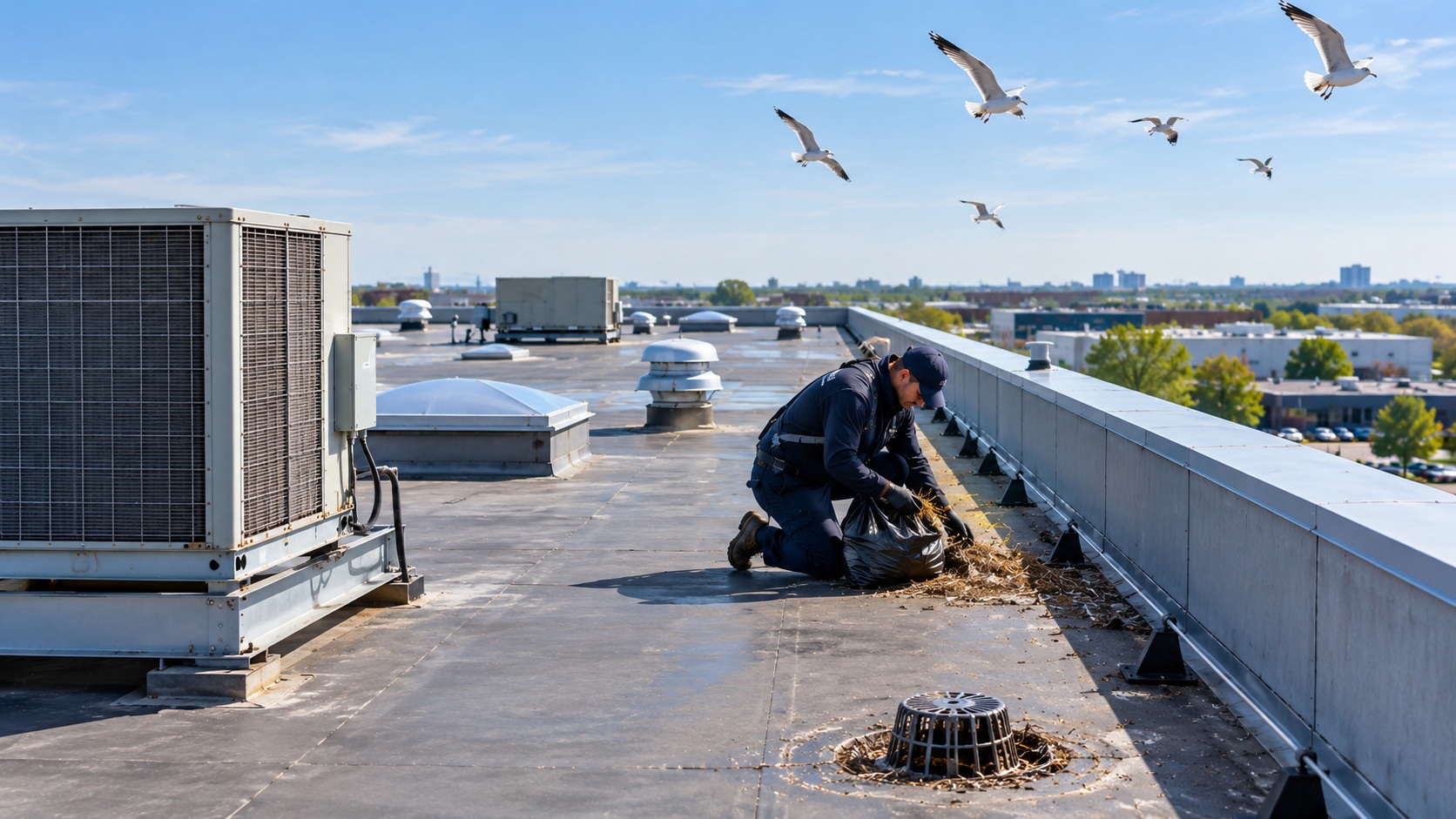
Our preventive visits focus on discouraging birds from establishing or repeatedly using nesting locations — they are not a cleaning service. Where nesting material, droppings, feathers, or organic debris create a significant sanitation issue, an additional cleaning fee applies, quoted based on the extent of accumulation and the work required.
High-level infestation or heavy accumulation always requires a separate cleaning assessment before charges are added — cleaning is only included when specifically stated in the service agreement. Cleaning or removal of material involving active nests, eggs, or protected migratory birds is performed only when legally permitted and authorized.
Eggs, Active Nests & Protected Wildlife
In Ontario, seagulls, their nests, and eggs can be protected under the Migratory Birds Convention Act. This program does not authorize our technicians to remove, handle, destroy, relocate, or otherwise interfere with protected birds, eggs, or active nests. When breeding activity is identified, the location and condition are documented and the appropriate legally permitted procedure is determined.
Permits are the property owner’s responsibility. We tell clients clearly when their roof’s activity level means a permit is needed, and point them to the right federal resource so they can apply.
Official permit information: Environment and Climate Change Canada — Migratory Bird Permits (https://www.canada.ca/en/environment-climate-change/services/migratory-bird-permits.html)
No permit generally needed
Site inspection, lawful hazing before nests are established, monitoring, and documentation.
Permit generally required
Removal, handling, relocation, or destruction of active nests, eggs, or protected birds — never performed without confirmed ECCC authorization.
Service Area
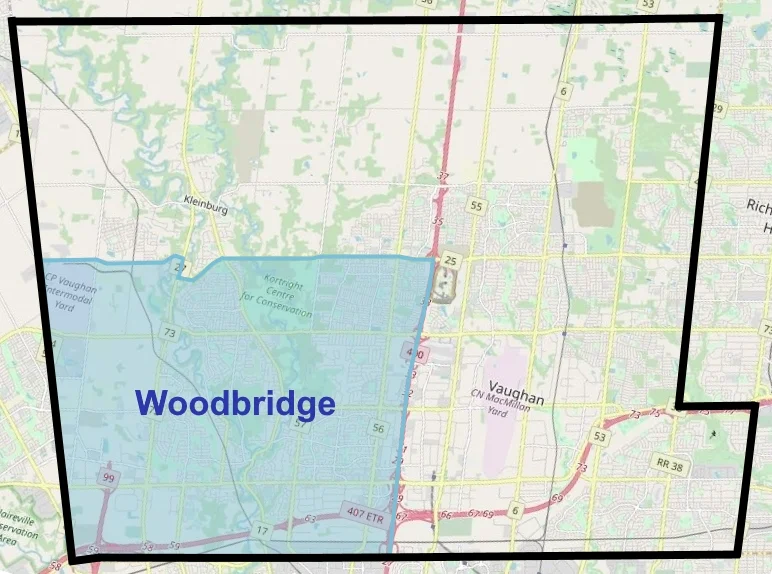
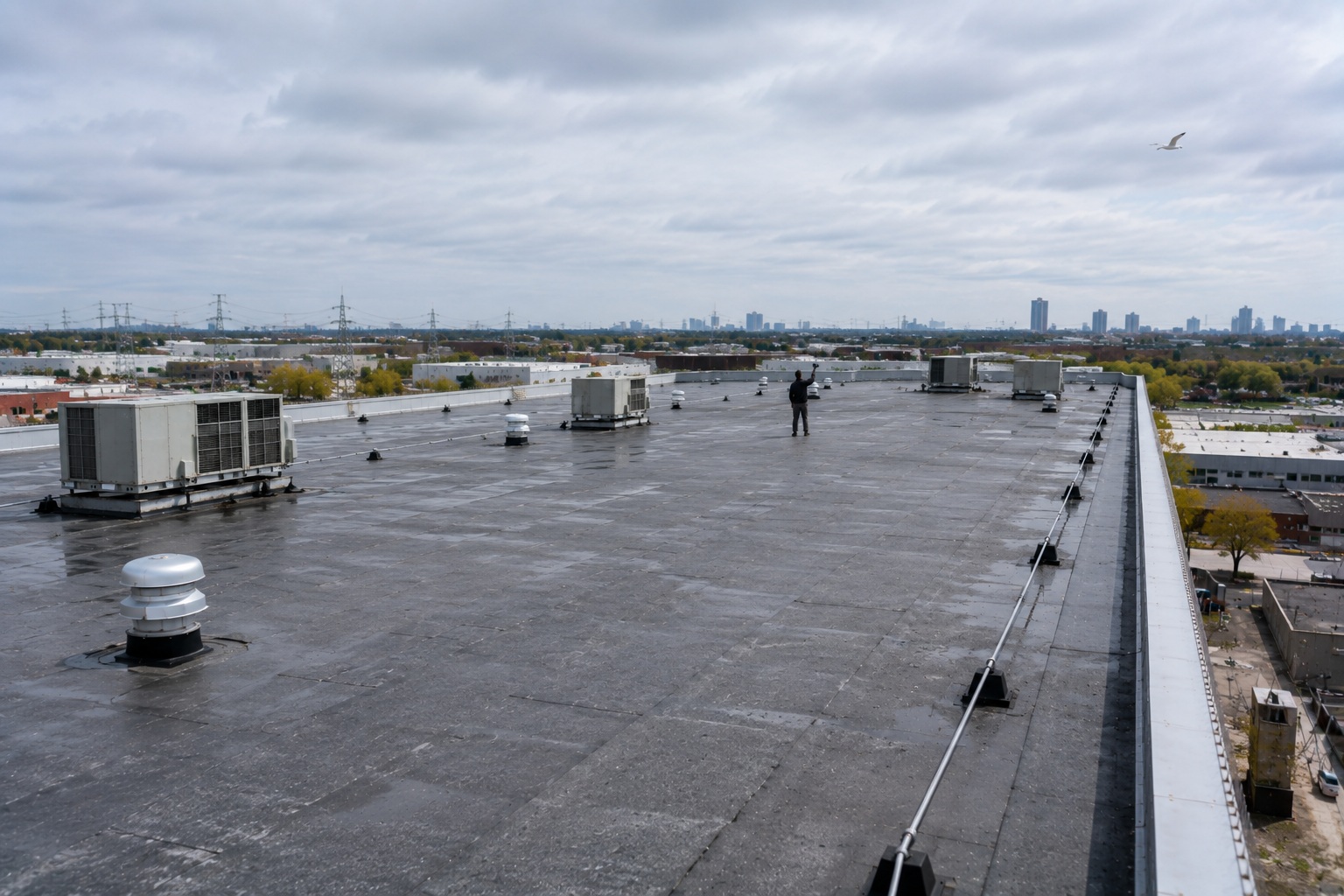
Wildlife Pro services flat commercial and industrial roofs on shopping centres, warehouses, and multi-unit buildings throughout Mississauga, Toronto, Vaughan, Concord, and the wider Greater Toronto Area.
Get a Free Roof Assessment
What a Lawful Hazing Program Protects
Rooftop equipment
Droppings and nesting material corrode HVAC units, block drains, and shorten roof membrane life.
Liability & compliance
Documented, permit-aware service reduces the risk of non-compliant handling of protected birds, eggs, or nests.
Foot traffic & image
Fewer droppings and less noise near entrances, loading docks, and parking areas.
Frequently Asked Questions
Do you remove seagulls from commercial roofs?
No — this is a hazing and prevention program, not a trapping, capture, or removal service. We discourage seagulls from using your roof through lawful hazing, deterrence, and preventive measures. Live birds are never caught, trapped, relocated, or physically removed.
What does “seagull hazing” actually involve?
Scheduled visits where technicians use lawful hazing and deterrence activity to discourage gulls from congregating or nesting, combined with monitoring, photographic documentation, and prevention recommendations — no trapping or capture involved.
Is cleaning included in the hazing visits?
Not automatically. Regular hazing visits don’t include cleaning. Where droppings, nesting material, or debris create a significant sanitation issue, a separate cleaning fee applies, quoted after an on-site assessment.
Is it legal to touch seagull nests or eggs in Ontario?
Generally, no — not without authorization. Seagulls, their nests, and eggs can be protected under the Migratory Birds Convention Act. Our technicians document active nests and eggs but do not remove, handle, or relocate them without confirmed ECCC authorization.
How much does the seagull hazing program cost?
The season starts with a $160 +HST initial inspection, then a weekly hazing level based on activity: $450/week at low activity, $350/visit at moderate activity (2x/week), or $250/visit at high activity (up to 3x/week). Heavy accumulation or cleaning needs are quoted separately after inspection.
| This program is primarily a hazing, deterrence, monitoring, and prevention program. It does not include catching, trapping, relocating, or removing live seagulls. Any intervention involving eggs, active nests, or protected migratory birds is subject to applicable federal and provincial legislation and any required permits or authorizations. The final scope of work, service frequency, cleaning requirements, and pricing may be adjusted following the initial inspection and assessment of the property’s bird activity and level of infestation. |
Commercial Seagull Removal
Keep Seagull & other wild animals from your business with commercial wildlife removal services. We offer wildlife removal in the GTA for your business.
Tap to call (647) 531-9060